
It is now possible to use Simplified registration in DORIS, a new feature that provides researchers with an option to quickly describe and share their material. This metadata profile has been developed to facilitate the publication of smaller, less detailed dataset descriptions and offers a smoother process than the regular subject-specific profiles.
Simplified registration includes only a limited number of metadata fields and is designed for researchers who want to make data available without having to provide a full description. This may, for example, apply to material that does not require extensive metadata or where the main reason for describing the data is to share a basic description quickly, which can then be expanded at a later stage.
Unlike more comprehensive dataset descriptions, these datasets will not comply with the FAIR principles to the same degree. However, they can be upgraded at any time by adding more metadata. Updates to metadata for published datasets do not require a new review, making it possible to gradually improve and enrich the data description. When metadata for a dataset are updated, researchers can also easily switch to one of the subject-specific profiles in DORIS. This means that, over time, the dataset description can achieve a higher degree of FAIRness and become more accessible to secondary users.
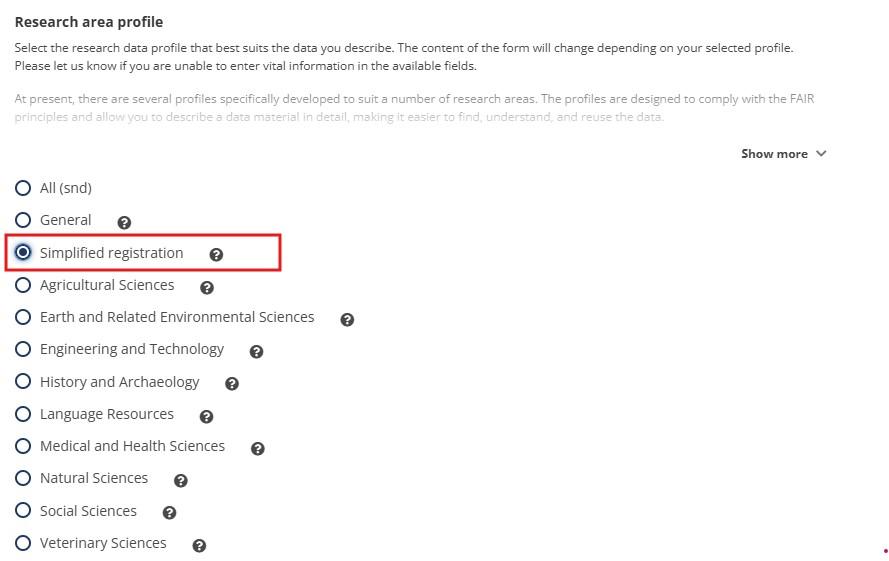
Although simplified registration of datasets involves a less comprehensive review process prior to publication, there are still requirements to ensure that the material is classified and shared correctly. The access level of the data must correspond to the content and, for example, data containing sensitive personal information must be shared with restricted access.
“The aim of simplified registration is to offer researchers a faster and more flexible manner of sharing data. It is also a way to ensure that the data-holding research organization retains control over how data are managed and stored, as an alternative to using generic data repositories,” says Sara Svensson, Section Manager of Research Data Services at SND.