
In recent years, qualitative data have received increasing attention in efforts to make research data findable and accessible for reuse. SND has launched several initiatives under a common umbrella to build knowledge and awareness in this area. These include work with data from artistic research, the flagship initiative IAC Art Files, making interview data from the KAFFE project openly accessible, and creating opportunities for discussion and exchange through the SND Network’s working group for qualitative data, KvalDataGruppen.

“There is considerable interest, both within the network and at SND, in learning more about how we can manage and work with qualitative data in practice to make them accessible. It is important that researchers can express their needs, and that we in research support functions can respond to those needs and take a proactive approach,” says Madeleine Dutoit, Training Coordinator at SND.
Three key areas to address
Madeleine Dutoit identifies three key areas that need to be addressed to make further progress in working with qualitative research data:
- Good examples of how different types of qualitative data can be managed and made accessible need to be highlighted and discussed, to help establish a common best practice.
- There needs to be an active discussion about the level at which research data should be made accessible. One particular challenge, for example, is how far qualitative data can be anonymized without stripping them of important information and making them unusable.
- Considerable resources are needed to process qualitative data so that they can be made accessible for reuse. Where should those resources come from? And which data are worth investing sufficient resources in?
“It is encouraging that researchers working with qualitative data have become more aware that making data accessible is becoming standard practice, but we are still only beginning to wake this sleeping dog. We have tried to find good examples of qualitative data, including by searching DORIS, but unfortunately there is not much there. What little we have found consists mostly of Excel files with very limited information,” says Madeleine.
Systems and services need to accommodate qualitative data
In November, SND is organizing two events focusing on qualitative data: Artistic research data – practices, perspectives and potential and Responsible sharing and reuse of qualitative data: Reflections from the QualiFAIR project. Madeleine Dutoit is responsible for the latter, where Agata Bochynska from the University of Oslo Library will discuss how qualitative and context-dependent data can be made FAIR.
“In general, we need to do more to adapt our systems and services to qualitative data as well, perhaps by involving researchers and doctoral students in our development projects at an earlier stage. As a researcher myself, some tools give me the chills because they are so far removed from where I am and how I work. How are my data supposed to fit in here? They practically scream, ‘we don’t belong here’. This is a major challenge that we need to address,” says Madeleine Dutoit.
Strong response from the artistic research community
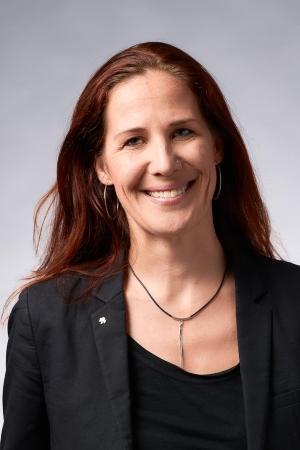
One person who has been tackling this challenge for the past couple of years is Karin Westin Tikkanen, Senior Advisor at SND. She has led an SND project on artistic research data, which will be brought to a close later this autumn. The project has organized several full-day seminars and discussion sessions, visited higher education institutions specializing in the arts, and initiated various collaborations. One of SND’s flagship initiatives, IAC Art Files, is also linked to the project. The response from the artistic research community has been strong.
“I think one reason we have been successful in reaching people is that we have been careful to approach them with respect. There is sometimes a tendency in our field to talk as though absolutely everything should be made accessible. But you can start small. When something is concrete, it becomes less daunting. It might simply be a matter of making a data description or documentation accessible,” says Karin Westin Tikkanen.
Connecting with other researchers and the importance of documentation
She explains that the project has worked in two stages. The first involved mapping how research data advisors and librarians work with artistic research. In music, for example, there are already very good metadata thanks to established cataloguing practices, including controlled vocabularies for musical styles, periods, and instruments.
In the second stage, the project spoke with artistic researchers about how they conduct their research, what can be documented, and for whose benefit. Making data accessible is still an unfamiliar concept.
“Instead, we have talked a great deal about connecting with other researchers and about the importance of the documentation itself. Artistic researchers rarely refer to researchers in the same field, but more often to philosophers or researchers in other disciplines. With clearer documentation of the research process that is also made accessible, it becomes possible to start referencing and highlighting knowledge within the field itself,” says Karin Westin Tikkanen.
No clear focus on data collection
Like Madeleine Dutoit, Karin Westin Tikkanen emphasizes the importance of being responsive to researchers’ needs and to the way their research is conducted. Artistic research does not have a clear focus on data collection; rather, data are something that emerge in the course of the research. It is a matter of recognizing insights and documenting them.
“In some areas, such as the performing arts, it is still unclear what should be considered research data. Music produced by a researcher is not data; it is the result of the research process. But at a later stage, that music can become data. Copyright then becomes the major issue. You cannot simply make the music accessible as it is; the creator also needs to be acknowledged,” says Karin.
The full-day seminar in Malmö on 4 November will mark the conclusion of the project. The programme will include a presentation of the new Art Files portal, as well as presentations on distinguishing ‘art’ from ‘data’, and on citing and describing material. The day will conclude with a performance depicting what happens when artistic researchers encounter data management.
“It is wonderful to see all the activity and discussion that is taking place. This has really developed over the course of the project. The artistic research community has now taken ownership of the issue, and I think we will see many exciting developments over the next few years,” says Karin Westin Tikkanen.